Explosion of the USS Maine

Written By Tripzibit on May 21, 2013 | 05:57

The USS Maine was an American battleship on a peaceful visit to Havana, Cuba, when it suddenly exploded at 9:45 P.M. on February 15, 1898, killing all 274 American sailors aboard. The ship was at anchor at the place assigned by port authorities. The exact cause of the disaster was never determined, but most speculation at the time and subsequent investigations pointed to the explosion of an external mine that set off five tons of gunpowder in the ship’s magazines. The explosion came during escalating tensions between the United States and Spain regarding Spain’s maladministration of Cuba, one of its last colonial possessions, and harsh suppression of the island’s independence movement.

Two months after the event and largely because of it, the United States declared war on Spain. Immediately after the explosion, Spain offered its regrets and helped the survivors. The Maine’s captain said he could not explain what had happened. President William McKinley and most American opinion leaders called for a suspension of judgment until the navy reported on its inquiry a month later.

USS Maine

The Maine had been commissioned as a battleship (although it was originally classified as an armored cruiser) on 17 September 1895. Her captain in 1898 was Charles D. Sigsbee, who sent the note to Washington informing them of the disaster. In part it read: “Maine blown up in Havana Harbor and destroyed. Many wounded and doubtless more killed and drowned. . . . Public opinion should be suspended until further report”.

Despite Sigsbee’s plea against jumping to conclusions and the refusal of the U.S. government to speculate on the cause of the explosion, public opinion began to make its own judgment, inflamed by the “yellow press” of Hearst and his rival, Joseph Pulitzer.

Pulitzer’s New York World of 17 February 1898 ran the headline, “Maine Explosion Caused by Bomb or Torpedo?” with a graphic illustration of the Maine exploding (complete with bodies being thrown from the ship) beneath. Articles quoted “experts” speculating that “a torpedo was used,” and the wounded survivors of the Maine expressed their opinion that it was “a deep laid plot of Spaniards.”

Three days later, Sigsbee himself was quoted as believing “a submarine mine blew up the Maine” (New York World, 20 February 1898). By 24 February, not even ten days after the explosion, headlines ran in the World that left no doubt that the papers believed that it had been no accident: “Experts at Havana Say Some Great Exterior Force Rent and Sunk the Ship” and “Fifty Physical Proofs that Maine Was Blown Up by a Mine or Torpedo.”

The speculation in the press in the first days after the explosion was based on little actual evidence, but fed into the growing public clamor for action against the Spanish. The government continued to refuse to comment, instead waiting for the results of the official investigation that had been launched immediately after the disaster. Divers and armor experts were sent to investigate the physical evidence of the wreck, and a Naval Court of Inquiry was held. The public believed that it would provide concrete evidence of Spanish guilt. At the same time, the Spanish conducted their own investigation (as the Maine had blown up in their territorial waters) and concluded that it was caused by an internal explosion.

On 28 March, the official report was submitted: “In the opinion of the Court, the Maine was destroyed by the explosion of a submarine mine, which caused the partial explosion of two or more of her forward magazines. The Court has been unable to obtain evidence, fixing the responsibility for the destruction of the Maine upon any person or persons”.

The U.S. Naval Court of Inquiry interrogated survivors and eyewitnesses, and several navy divers explored the sunken wreck. The explosion of the forward ammunition magazines, they determined, obviously had caused the sinking. Divers said the ship’s bottom plates were all bent inward, consistent with an external mine. (If an internal accidental explosion had occurred, the bottom plates would have been bent outward.) On the floor of the harbor, a large cavity was seen, presumably from the explosion. On hearing the report, many groups demanded war.

Public opinion in the United States had been hostile to Spain for several years as that country tried to suppress growing rebellions in Cuba and other colonies. The Maine was sent to Havana to protect American citizens in case of rioting and to show the intense American interest in resolving the crisis. The Maine explosion so dominated headlines and public attention that quiet diplomacy became extremely difficult. Although opposed to war, McKinley demanded that Spain immediately end the chaos. Madrid repeatedly stalled for time, making promises that never took effect, hoping perhaps to gain diplomatic support from European powers that never came.

Cuban insurgents advised McKinley that their insurrection would fall apart if Spain granted an armistice. The American business community, although opposed to war, warned that further months of uncertainty were intolerable. Finally, McKinley told Congress to make the decision, knowing that the war hawks dominated Congress.

On April 25, 1898, Congress declared war on Spain. “Remember the Maine” became a popular rallying cry and song. The United States quickly won the Spanish-American War, and Cuba gained its independence from Spain. But the mystery of what caused the Maine to explode continued.

A thorough investigation in 1911 by the navy pointed to an outside mine as the source of the initial explosion. Sixty-five years later, U.S. Admiral Hyman Rickover reanalyzed the data and concluded it might have been an accident.

The latest inquiry, completed in 1999, was sponsored by the National Geographic Magazine. It commissioned an analysis by Advanced Marine Enterprises (AME), using computer modeling that was not available for previous investigations. The AME analysis concluded that “it appears more probable than was previously concluded that a mine caused the inward bent bottom structure and the detonation of the magazines.”

Multiple theories have circulated as to what happened. The first theory is that it was an accident, caused by spontaneous ignition of the bituminous coal in the coal bunkers, located near the powder room, that could have heated the gunpowder to 450°F and set it off. There was no direct evidence for this hypothesis. The blast effects on the hull seem o show the causal force was outside, not inside; the coal bunkers were inspected daily, had never shown problems before, and the coal used was not known to spontaneously ignite. The alternative theory held that an external mine was detonated underwater on the port side by experts who knew what they were doing. Spain had recently purchased mines that could easily have done the job. One could have been seized by Cuban insurgents and set off to incite Americans into declaring war, or a mine could have been detonated by rogue Spanish officers angry at the intervention of the Americans. Perhaps Spanish authorities had ordered the mine placement, or one could even have been placed by American authorities seeking to escalate the conflict.

Historians agree that it is highly unlikely that the Spanish government or the American government ordered the sabotage. The most likely suspect, for most historians, are the insurgents or rogue Spanish officers, but there is no direct evidence to implicate either group. Spain’s reluctance to negotiate in 1898 was caused by its own internal crisis. Spain was itself on the verge of civil war, but simply withdrawing from Cuba would have worsened its crisis. One honorable solution was to lose a short war to a much more powerful country, which is what happened. A new generation came to influence in Spain (the “Generation of 98”), and civil war was averted for another 35 years.

Historians have debated whether American public opinion was deliberately inflamed by the sensationalistic “yellow journalism” of newspaper publishers William Randolph Hearst and Joseph Pulitzer in New York City. Early 20th-century historian James Ford Rhodes concluded that the press “had manipulated the real news, spread unfounded reports, putting all before their readers with scare headlines.” By contrast historian John Offner has insisted, “there is no evidence” to indicate that the “sensational press” influenced McKinley’s policy, suggesting that “its impact on changing public opinion may have been limited.” When the war came—“a splendid little war,” one official called it—it lasted only six months and drew Americans together, especially the southerners whose patriotism had been in doubt since the Civil War a generation earlier.

Sources:
Conspiracy Theories in American History: "An Encyclopedia" edited by Peter Knight;
Disasters, Accidents, and Crises In American History by Ballard C. Campbell

Pic Source:
Conspiracy Theories in American History: "An Encyclopedia" edited by Peter Knight page 701
05:57 | 0 komentar

Mystery of the Lake Toplitz

Written By Tripzibit on May 14, 2013 | 23:10

According to legend, in the spring of 1945 numerous crates of secret cargo were trucked through the dense mountain forest to Lake Toplitz and dumped into the 350-foot-deep lake by Nazi officers just before U.S. and allied forces closed in on them. Nobody knows exactly what was inside. Some believe they contained gold looted by German troops throughout Europe and carried back to Germany while others believe that they contain documents showing where assets confiscated from Jewish victims were hidden in Swiss bank accounts.

During 1944-1945, the shore of Lake Toplitz served as a Nazi naval testing station. Using copper diaphragms, scientists experimented with different explosives, detonating up to 4,000 kg charges at various depths. They also fired torpedoes from a launching pad in the lake into the Tote Mountains, producing vast holes in the canyon walls. Millions of counterfeit pound sterling notes (£100+ million) were dumped in the lake after Operation Bernhard, which was never fully put into action. There is speculation that there might be other valuables to be recovered from the bottom of the Toplitzsee such as diamonds and gold worth millions, stolen art, and also documents detailing the whereabouts of other Nazi treasures.

Lake Toplitz

Old Toplitz-watchers believe that if there was treasure down there, it has long since been recovered and spirited away. That would have been possible in so isolated a region — the lake is frozen at least five months of the year, and much of the older local population still has a certain sympathy for swastika-related times past.

In 2005, the Austrian government has given a US team permission to make an underwater expedition to the log-infested bottom of the lake. This is not the first time explorers and treasure hunters have tried to retrieve the lake's legendary lost gold. Treasure hunters have been flocking to Lake Toplitz ever since a group of diehard Nazis retreated to this picturesque part of the Austrian Alps in the final months of the second world war.

In 1947 a US navy diver became entangled in Lake Toplitz's many submerged logs and drowned. Then in 1959 a team financed by the German magazine Stern had more luck, retrieving £72m in forged sterling currency hidden in boxes, and a printing press apparently created by the Nazis in an attempt to crash the British economy. Wooden boxes containing secret Nazi documents have also been found. In 1963 the Austrian government imposed a ban on explorations after another diver, led to the lake by an SS officer, drowned during an illegal dive. More recent expeditions have had mixed fortunes. In 1983 a German biologist accidentally discovered more forged British pounds, numerous Nazi-era rockets and missiles that had crashed into the lake, and a previously unknown worm. The last diving team to explore the lake, in 2000, had less luck. After a three-week search in an underwater diving capsule they came away with nothing more than a box full of beer lids, apparently dumped in the lake as a practical joke.

However, treasure hunters believe that the real treasures remain where the Nazis allegedly sank them -- on the bottom of the lake encrusted with a thick cover of logs and mud. Several divers have been killed over the years after becoming entangled in the branches on the bottom of the lake, but that hasn't dimmed the interest in exploring.

Sources:
http://www.guardian.co.uk/world/2005/apr/06/austria.secondworldwar;
http://abcnews.go.com/Travel/divers-banned-secret-nazi-treasures/story?id=8752013#.UZJDBrL4NSJ;
http://abcnews.go.com/International/story?id=83199&page=1;
http://abcnews.go.com/International/story?id=83199&page=2#.UZJUvbL4NSI;
http://en.wikipedia.org/wiki/Lake_Toplitz

Pic Source:
http://en.wikipedia.org/wiki/File:Toplitzsee.jpg
23:10 | 0 komentar

Lost Treasure of Petra

Written By Tripzibit on May 11, 2013 | 06:30

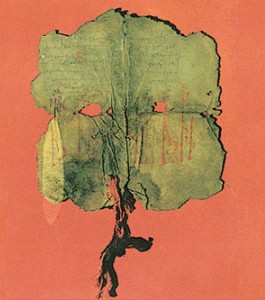
Few people realize that there is actually a treasure connected with the legend of Petra. According to the news article in the Ottawa Journal for January 29, 1927. Headlined: “Will Hunt for Enormous Treasure Hidden for Years in Mystery City of Petra,” it reads as follows: “LONDON (by Mail) - Exquisite gold ornaments and precious stones—part of what may prove the greatest ancient treasure ever recovered, making insignificant even the splendors of Tutankhamun’s tomb—have come into the hands of an eminent archaeologist connected with the British Museum.“ The story of the discovery by a wandering Bedouin, who literally tripped on the “Open Sesame” to a labyrinth of underground passages that led to the treasure-house of a long vanished race, transcends the imaginings of the “Arabian Nights” author.

  Headline news of Ottawa Journal (29-1-1927)

Further romance is added by the theory that the treasure includes the loot of ancient pirates and so plausible does the story appear in the light of the genuine finds, including a Cretan gold buckle of long ago, that an expedition of scientists has been sent to the site of the mysterious stone city of Petra, between the Gulf of Akabah and the Dead Sea.

Investigation revealed that the first treasures had been obtained from an Arab sheik at Jerusalem, who furnished protection to caravans in Northern Arabia. After months of effort this man was traced. It was then discovered that the treasures had been unearthed by Arabs at Petra.

The city was, in its prime, the capital of Nabateans, an ancient Arab tribe which conquered the Edom of the Bible, and a hundred years before Christ, had created a powerful kingdom extending north to Damascus, west to Gaza, and into Palestine and Central Arabia. The Nabateans controlled the caravan routes of the interior and were also great sailors and pirates. Both King Solomon and the Queen of Sheba used them to carry goods by sea and land to distant countries.

This region remained unconquered until a mysterious and unrecorded tragedy emptied it of its hundreds of thousands, practically wiped out the Nabatean race and caused it to be shunned for centuries by the Arabs and nomads around it.

There’s no record that the accumulated wealth of Petra has ever been carried away. If that treasure ever existed it is believed that it still must be there. Expeditions before the war (World War I) were dangerous because of the attitude of the Arabs and the isolated locality. The city was lost to European knowledge for centuries until it was rediscovered in 1812 by the German explorer Buckhardt. Since then not more than a dozen archaeologists have visited it because of its inaccessibility.

But since the war, under the British protection of Palestine, matters have changed, and the party now on its way under military guard will have no trouble in investigating and excavating. The clue to the treasure chambers is shown close to a remarkable building called: ‘The Treasury of Pharaoh’, which like all the other temples is cut out of the side of the mountain.

According to the story of the Arab, some wandering Bedouins encamped in Petra, in the upper valley, close to the Treasury. One of them passed back into the deep rooms within the cliffs. Poking around among the debris be stepped upon ‘a moving stone.’ The stone tilted and dropped back into a shallow vault, then crashed back into place, leaving him in darkness. He cried out in vain for help. Feeling around the vault, he came across the opening of a passage. After groping his way along it for about half a mile, always moving upwards, he saw a faint light. He came out into a large chamber, from which six other passages led back into the mountain. In the center of the chamber, on a pedestal, was a huge urn. He climbed the pedestal and within the urn saw a heap of gems and gold. Taking a couple of handfuls, he knotted them in his cap and went to a fissure in the wall through which the light streamed and found himself out on the side of the mountain far above the valley. Scrambling and falling, he got back safely to his camp near sunset.

He showed his find to the half-dozen members of his family, and they spent several days trying to discover “the stone that moved,” and the fissure, but without success.

The ancients had great skill, British Museum authorities point out, in contriving secret passageways and doors whose entrances were apparently part of the stone walls themselves, but which, by a cunningly devised system of balances, would easily open under pressure at a certain point.

The treasure may have been found in an entirely different way, but the Arab’s story is considered worth investigating.

Since the news article appeared 75 years have passed and one cannot help but wonder if the treasure mentioned and the secret door still are untouched. People in 1927 did not have ground penetrating radar and modern electronic technology, so if something does still exist on the site, it is only a matter of time before it once again comes to light.

Sources:
Atlantis Rising Magazine Vol.35 : Indiana Jones' Treasure—Was It Real? Petra’s Magnificent and Mysterious Ruins May Be the Home of Unclaimed Wealth written by W. Ritchie Benedict;
http://unmyst3.blogspot.com/2009/03/petra-mysterious-hidden-city.html

Pic Source:
Atlantis Rising Magazine Vol.35 : "Indiana Jones' Treasure—Was It Real? Petra’s Magnificent and Mysterious Ruins May Be the Home of Unclaimed Wealth" written by W. Ritchie Benedict page 71
06:30 | 0 komentar

Chapters

Popular Posts

Random Posts